I Love This Sh*t
Finding Meaning in Duty
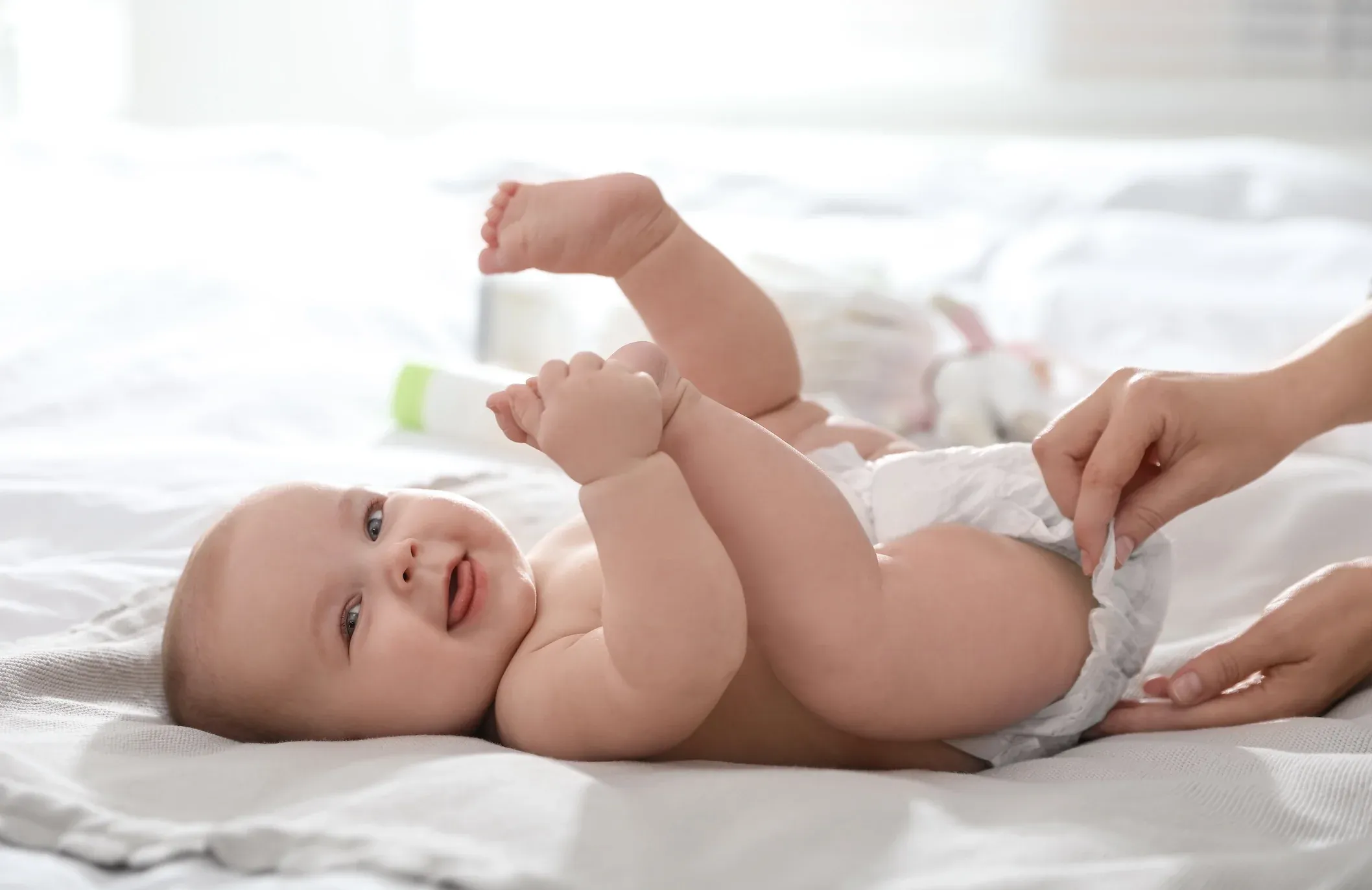
“What did you eat?!” I ask my daughter rhetorically. Whatever it was, the smell offends and I grimace at the smushed olive-toned smattering of waste that must be cleared with semi-translucent disposable wipes. To add to it all, B is wailing over the indignity of lying on her back against a cold plastic mat. “You think I enjoy doing this?” I ask her, again rhetorically. The truth is, I do.
A 1982 study found that 40% of dads self-reported that they “rarely changed” a diaper1. For me, it is one of the tasks I can take from Madi’s load and thus I do so at every opportunity. Owning this task began as an act of service to her, in gratitude for the work she did bringing our first daughter A into the world. There is still an element of service towards Madi in my ready willingness to handle diaper duty, but it is primarily aimed at cultivating an unshakeable sense of self-worth in our daughters. I want to see them grow into caring, responsible adults who someday choose to take these duties on for their own.
As I often find myself doing these days, I had a brief moment while finishing changing a poopy diaper where I wondered if AI and robots could obviate diaper-changing, or at least make it less gross. A utilitarian calculus as best I could tabulate it would treat this as an improvement. Eons of exposure to fecal-borne disease have trained our brains to abhor the sight and scent of a diaper full of poop, even if modern medicine has rendered dysentery impotent in high-income societies.
These technological developments have proliferated across most facets of parenthood. As Robert Caro describes in his biography of Lyndon Johnson, rural electrification saved generations of women in Texas’ Hill Country from the stooped shoulders that befell their mothers, who had to carry the family’s daily water from the well2. Laundry which was cleaned by hand in streams or tubs can now be tossed in the washer and dryer with Netflix on in the background. We can purchase meals at the store that are some combination of easy to prepare, healthy, and delicious, all for a small fraction of a day’s wages.
I have to be intentional with my gratitude to properly appreciate these common luxuries, although it comes more readily when I’m confronted with the aspects of parenthood that are still trying. I think about how much harder my parents had it, and how their parents’ generation must have thought it remarkable how easy parenting had become. I can imagine an android-augmented future in which parenting can be entirely opt-in, all of the unpleasantries disposed of like soiled diapers in a pail. Without any challenges, will my children ever have occasion to appreciate the chain of loving care that preceded them?
The mere availability of options to make parenting easier does not mandate their use. Madi and I have done many multi-hour road trips and days of air travel without an iPad to entertain our daughters, not for an inability to acquire one. Hiring a night nurse when Madi was post-partum would have been orders of magnitude more expensive than a tablet, but it also would have alleviated much of the exhausting burden of those early months. She maintains she wouldn’t have given up those shared moments with the girls in the quiet hours before dawn for more sleep, even if it were free.
I don’t insist that our choices are the right ones. Every parent has their own circumstances they operate within and the set of tools that makes the days manageable. More than breaking even, parenthood can and should be frequently rewarding. But working against the popular narrative that parenthood is entrapping, some argue that parenthood is in fact great because it is fun. While well-intentioned and certainly true in some respects, this is misleading. If you’re considering parenthood because you think it will actually be more fun than your hedonic, childfree life, I’d reconsider.
To parent is to commit yourself to something beyond your own immediate satisfaction, and to be constantly on call to that commitment no matter how much you’d love a night off, or even just a fifteen-minute break. It’s hard, and dare I say shitty at times. My trick for enjoying parenthood is to not try to defeat all the difficulties, but to embrace them. I don’t have to change my daughter’s diaper, I get to do it. I get to spend this specific day with them, and I only get to do it once. Amidst the hardships are the most rewarding moments life has to offer.
It doesn’t help anyone to martyr myself at every turn in resistance against the liberating march of modernity. I could choose to handwash all of the girls’ dishes to further my commitment to them, but that would needlessly waste my time for no benefit to their lives. Progress has given us options our predecessors could only dream of, and I make use of many of them with gratitude. But I still choose to keep some duties for myself.